Social Media Explainer Posts and Performative Activism

Since the Black Lives Matter movement erupted in early June 2020, a vast influx of social media explainer posts have appeared on Instagram, Facebook, and other social media platforms. These short snippets of information cater to busy social media users who hope to better understand social justice issues. While these posts have been effective at introducing social media users to digital activism, they can also be incredibly oversimplified.
Let’s analyze this recent post from @courtneyahndesign on Instagram:

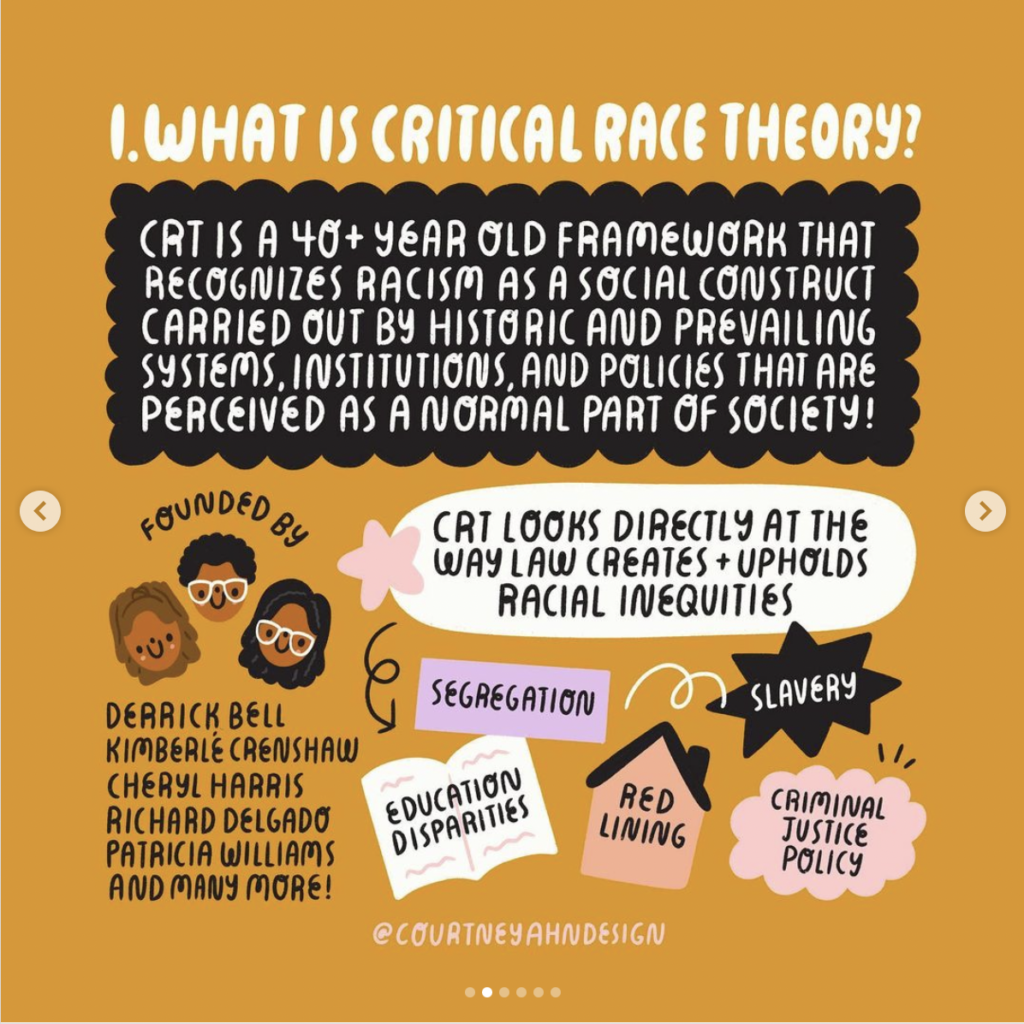

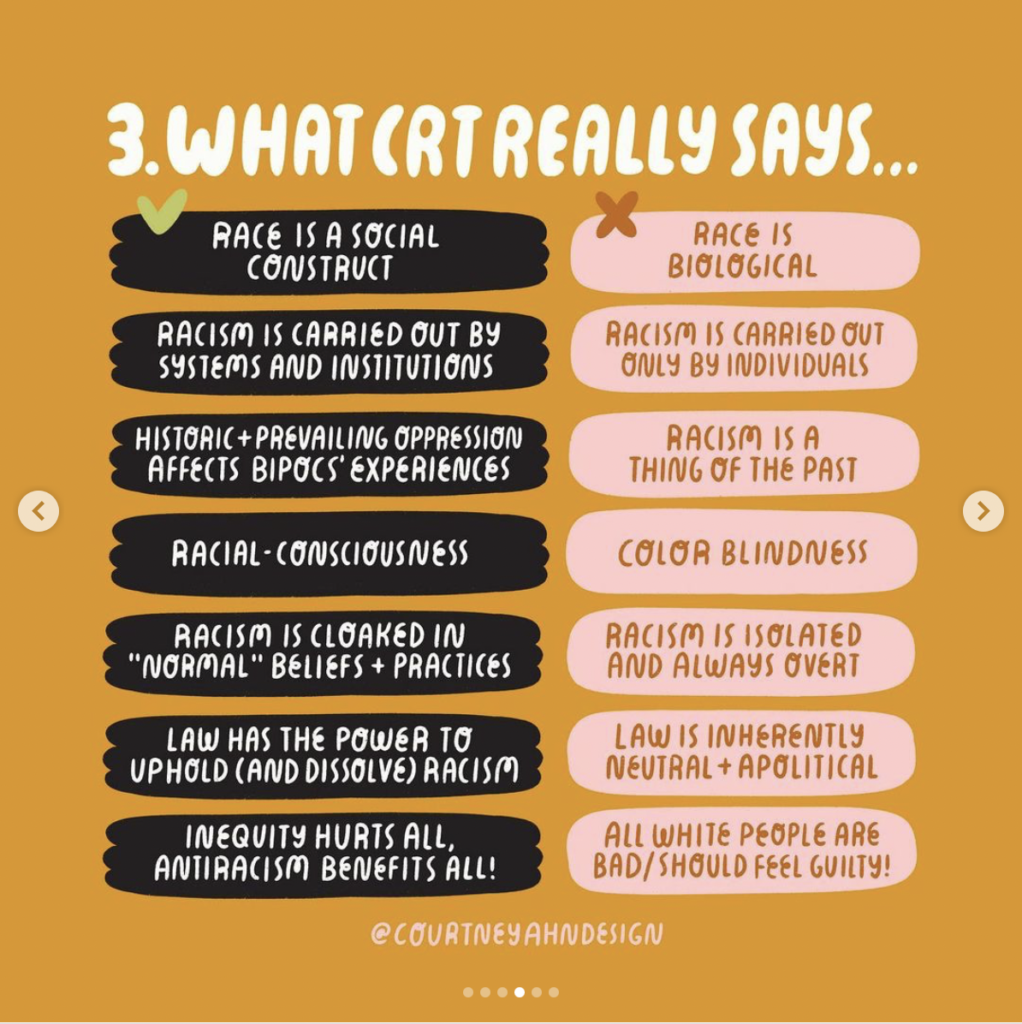


This post is about critical race theory. More specifically, it is about why critical race theory is important. While I tend to agree with the creator that critical race theory absolutely should be taught at school, I don’t agree with the format in which her argument is presented. These activism carousels do more harm than good in promoting anti-racism and other social causes. There are two reasons why I have come to this conclusion. First, it oversimplifies a complex issue. Critical race theory is a dense body of knowledge that cannot possibly be summarized in a hundred words. Although this can be said about any subject, this Instagram explainer post, by virtue of entering the cultural imaginary as part of a body of in-depth explanations of prominent topics, presents itself as a complete guide to critical race theory. In addition, much of their perceived merit comes from other Instagram users, who look to these posts to learn more about topics like critical race theory. However, this simplistic and one-sided analysis of critical race theory only serves to further polarize Instagram users. For example, it dismisses why CRT is under debate, claiming that “critics of CRT don’t understand or intentionally create a false definition of it.” This demonizes those who argue against teaching CRT, and it doesn’t do much to actually convince the opposition that teaching CRT is a good idea.
Secondly, Instagram explainer posts like the one above feed into performative social media activism. To clarify, performative activism seeks to “capitalize on the moment for social clout rather than actually support the movement and its demands,” according to Yale Daily News. This post aestheticizes activism to make it more digestible to Instagram audiences. The bright colors and graphics of black and brown people encourage users to repost and reshare the graphic, giving them the illusion of being an activist. This idea rests at the core of performative activism; many users participate simply to show that they are participating, and reposting explainer posts gives them an easy way to satisfy their desire to be an “activist.” However, this commodifies activism, and as a result, commodifies the struggles of minorities, allowing people to gain social capital by sharing their stories. In the end, the reductionistic nature of social media activism is counterproductive to achieving social justice.
*Disclaimer: I’m in no way criticizing the creator as an individual. I respect her effort to add a note that “this is not a comprehensive guide addressing every nuance or point on the topic.” This is simply an analysis of the effects of social media explainer graphics, and it is in no way unique to this post; rather, it is a criticism of the images and connotations associated with posts like these.


Leave a Reply